

Turning Monitoring Data Into Recognition: How to Reward Your Best Performers With Objective Evidence
Most recognition programs still rely on manager memory, gut instinct, and who spoke up in the last all-hands meeting. Monitoring data gives you something better: an objective, continuous record of who actually delivers.
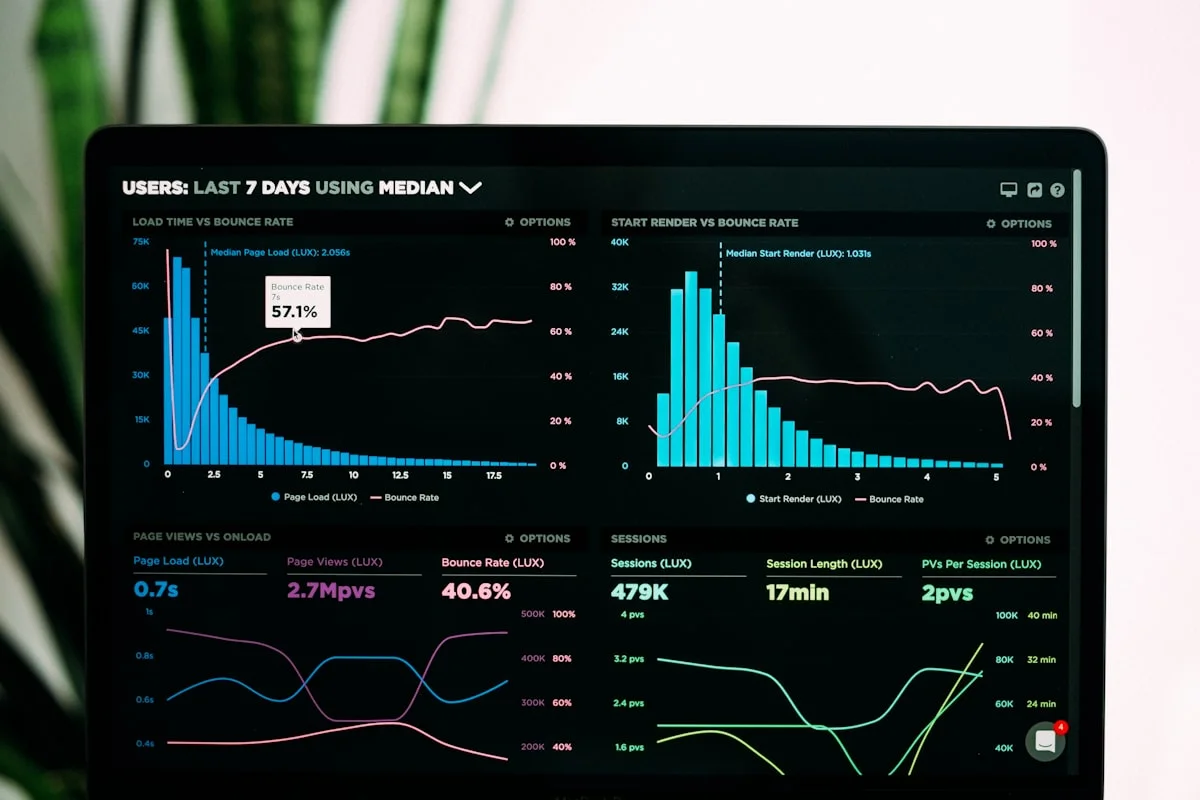
Employee monitoring data recognition programs use productivity and activity metrics collected through workforce monitoring platforms as objective criteria for identifying high performers, evaluating consistent output, and anchoring reward decisions in evidence rather than impression. When organizations repurpose monitoring data for recognition rather than only for oversight, employees experience a fundamental shift in how they perceive the monitoring program itself. Recognition based on transparent, trackable criteria converts monitoring from a surveillance signal into a performance partnership. SHRM research indicates that employees who experience recognition tied to objective data report 41% greater satisfaction with their monitoring programs compared to employees whose organizations use monitoring data only for disciplinary review (SHRM Employee Recognition Survey, 2024).
This is not a minor distinction. Organizations with active monitoring programs often struggle with employee trust. The data gets collected, managers review it when something goes wrong, and employees associate the system with punishment. Data-driven recognition breaks this association at the root. When the same platform that flags an attendance issue also identifies the employee who maintained a 78% productive time average for eight consecutive weeks, the narrative around monitoring changes completely.
The Recognition Gap That Monitoring Data Solves
Traditional employee recognition programs suffer from a structural bias that most HR leaders acknowledge but few resolve: the employees who get recognized are disproportionately those who are most visible. The vocal contributor in meetings, the person whose desk is nearest the manager's office, the employee who sends the most Slack messages. Consistent, quiet performance — delivering reliably, meeting every deadline, maintaining output without drama — frequently goes unnoticed.
But how significant is this gap? Gallup's 2024 State of the Global Workplace report found that only 23% of employees strongly agree they receive the right amount of recognition for the work they do. More telling, employees who receive inadequate recognition are 2.7 times more likely to say they will leave their employer within a year. The talent your organization loses to this recognition gap is rarely the loudest voices. It is often the steady producers.
Employee monitoring data solves this problem directly. A monitoring platform captures what managers miss: the developer who logs 6.3 hours of focused coding time per day while everyone else averages 3.8, the customer support agent whose idle time never exceeds 8% across a full quarter, the analyst who consistently completes her committed task list by Thursday while peers carry items into the following week. These patterns are invisible to casual observation and precise in monitoring data.
The recognition gap widens further in remote and hybrid environments, where managers have even less incidental visibility into daily work behavior. Continuous performance management supported by monitoring data closes this gap by providing a consistent, location-independent record of work output that managers can reference with confidence whether their team works in one office or across six time zones.
Why Recognition Flips the Monitoring Narrative
Employee attitudes toward workplace monitoring programs are shaped primarily by what employees believe the data is used for. When monitoring data feeds only into investigation and discipline, employees develop a defensive orientation: they assume any data collection is potential evidence against them. This orientation is rational. If monitoring data has only ever appeared in conversations about mistakes, lateness, or productivity drops, the association is earned.
Recognition programs powered by monitoring data introduce a competing association. The same dataset that can flag a productivity decline can also identify the employee who sustained the highest focused work time across the quarter. When employees experience both outcomes from the same system, their perception of monitoring shifts from adversarial to functional.
Research from MIT Sloan Management Review (2023) found that employees at organizations with transparent, outcome-balanced monitoring programs, meaning programs that used data for both recognition and accountability, reported 28% higher trust in management and 19% lower monitoring-related anxiety compared to employees at organizations where monitoring data was used primarily for oversight. The mechanism is straightforward: when the system rewards as often as it investigates, employees stop experiencing it as a threat.
There is a second-order effect worth noting. Data-driven recognition increases employee engagement with the monitoring data itself. When employees know that high productivity scores trigger recognition eligibility, they check their own dashboards more frequently. Self-monitoring drives self-improvement. The manager who sets up a recognition threshold and makes it visible to the team effectively creates a performance system where employees coach themselves toward the target. This is the opposite of the micromanagement perception that poorly implemented monitoring can produce.
For managers navigating how to build monitoring programs that employees accept and value, the recognition layer is one of the highest-leverage investments available. Using monitoring data for coaching conversations addresses the development side of this equation; recognition programs address the reward side. Together, they create an environment where monitoring data functions as a career tool rather than a compliance burden.
Engagement & Wellbeing — This Week
Healthy workload index
Workload
▼ After-hours work down 30% after rebalancing workloads.
Illustrative eMonitor dashboard.
Which Monitoring Metrics Make Strong Recognition Criteria
Not every metric a monitoring platform captures is equally useful as a recognition criterion. The strongest recognition metrics share three characteristics: they reflect sustained behavior rather than isolated events, they are within the employee's control, and they connect directly to work outcomes the organization cares about.
Productive Time Consistency
Productive time percentage measures what proportion of an employee's logged work hours were spent in applications classified as productive for their role. A single high-productivity day means little. A sustained productive time average above the team benchmark across six or more consecutive weeks is a meaningful signal. Recognition criteria built around trend averages rather than peak scores identify employees who perform reliably, not those who sprint for a day when a review period opens.
eMonitor's productivity monitoring dashboards generate weekly and monthly productive time trends automatically, making it straightforward to identify employees who have held above a defined threshold without requiring manual data pulls. A common recognition threshold is maintaining productive time above 70% for eight consecutive weeks, adjusted by role, since a software developer and a customer support agent have different productive application profiles.
Attendance Reliability
Attendance data captures clock-in consistency, late arrival frequency, and schedule adherence across a period. Perfect or near-perfect attendance over a full quarter is a concrete, objective achievement that many organizations fail to formally recognize. Automated attendance tracking records every clock-in timestamp without requiring manager observation, providing a clean dataset for attendance-based recognition criteria.
Attendance recognition is particularly powerful in shift-dependent environments where schedule reliability directly affects team capacity. Recognizing zero-late-arrival quarters in a call center or a healthcare setting carries operational meaning beyond symbolism. It signals to the entire team that the behavior the organization depends on is the behavior the organization rewards.
Output Velocity and Task Completion Rate
Task completion rate measures the percentage of committed deliverables an employee completes within the agreed period. An employee who commits to 12 tasks per sprint and delivers 11.8 on average performs materially differently from one who commits to the same 12 and delivers 9.1. Project-level time tracking data, combined with task management integrations, makes this comparison objective and auditable.
Output velocity, meaning the trend in tasks completed per week over time, adds a growth dimension to recognition. An employee who increased their task completion rate by 22% over a quarter while maintaining quality indicators deserves recognition for improvement, not only for reaching an absolute threshold. Both types of criteria, absolute performance and growth trajectory, belong in a complete recognition framework.
Focus Time Quality
Deep focus sessions, defined as uninterrupted work blocks of 60 minutes or more in a primary productive application, indicate high-quality work conditions and strong personal discipline around attention management. Research consistently shows that knowledge workers produce disproportionately high-value output during focused work and disproportionately low-value output during fragmented, interrupted work. Employees who maintain high focus session frequency are often the people doing the organization's hardest thinking.
Monitoring data captures focus session frequency automatically. Recognizing employees who achieve a high average of deep focus sessions per week, for example three or more per day across a full month, rewards a behavior pattern that directly correlates with complex problem-solving, code quality, analysis depth, and creative output. It also sends a signal about what the organization values: actual work, not the appearance of busyness.
Idle Time Discipline
Idle time, the proportion of logged work hours where no keyboard or mouse activity is recorded, provides a floor metric for recognizing employees who stay consistently engaged throughout their work sessions. Idle time below 10% of total logged hours sustained over a full quarter represents genuine discipline, particularly for remote employees working without direct supervision. Recognition programs that include low idle time as a qualifying criterion reward self-management, which is among the most organizationally valuable behaviors in distributed work environments.

Building a Data-Driven Recognition Framework
A recognition framework converts the metrics above into a structured, repeatable process. Ad hoc recognition, even when data-informed, is less effective than a predictable system employees can orient around. The following framework gives organizations a practical starting point.
Step 1: Define Criteria Before Monitoring Begins
Recognition criteria gain credibility only when employees know them before the measurement period starts. Publishing criteria after the fact, even when the selection is genuinely data-driven, generates suspicion that the criteria were chosen to justify a predetermined selection. Define which metrics contribute to each recognition tier, what thresholds qualify, and how the measurement period is bounded. Communicate this information to all employees before the tracking period opens.
Criteria publication also serves a motivation function. When employees can see exactly what threshold qualifies for quarterly recognition, those who are close to qualifying have a concrete target to orient toward. The criteria become a transparent performance contract rather than a hidden evaluation.
Step 2: Adjust Benchmarks by Role
Recognition criteria that apply a uniform threshold across all roles will systematically disadvantage some employees and advantage others based on job function rather than individual performance. A software engineer's productive application profile is almost entirely development tools; a project manager's productive time includes email, calendar, and collaboration tools that monitoring platforms may classify differently. Role-adjusted benchmarks ensure that recognition reflects individual performance within a relevant peer group, not arbitrary cross-role comparisons.
Define separate criteria sets for at minimum: individual contributors, team leads, client-facing roles, and administrative roles. Each cohort competes against a benchmark derived from its own peer group's historical performance rather than against an organization-wide average.
Step 3: Give Employees Access to Their Own Data
Recognition programs built on monitoring data require that employees can see the data the program uses. Without employee-facing dashboards, data-driven recognition feels opaque and arbitrary regardless of how rigorous the methodology is. Employee access to their own productivity metrics, attendance records, and focus time data closes the information gap between the manager's view and the employee's understanding of their own performance.
Platforms that provide employee-facing dashboards showing each person's own productivity trends, attendance history, and focus metrics create the conditions for self-directed improvement. Employees who track their own progress toward recognition thresholds drive their own performance upward without waiting for a manager's quarterly review. The monitoring data becomes a personal performance tool rather than a management surveillance system.
Step 4: Build a Data Review Process Before Finalizing Selections
Monitoring data is accurate under normal operating conditions, but edge cases exist. An employee who cared for a sick family member for two weeks of the quarter should have an opportunity to flag that circumstance before their attendance record becomes the basis for recognition exclusion. A system outage that prevented clock-ins for a week should not penalize attendance scores. Build a brief review window into the recognition cycle where employees and their managers can flag data anomalies and request adjustments before final selections are made.
This review step costs little time and earns significant trust. It demonstrates that the recognition system values fairness over mechanical precision and that data is treated as evidence to be interpreted rather than verdicts to be executed. For organizations thinking through how to build equitable monitoring practices, the same principles apply: equitable monitoring frameworks require both transparent criteria and accessible review mechanisms.
Step 5: Establish a Predictable Recognition Cadence
Sporadic recognition, even when data-driven, generates less motivation than predictable recognition cycles. Quarterly cycles work well for most organizations: they are long enough that metrics reflect sustained performance rather than temporary peaks, and frequent enough that employees receive meaningful recognition within a calendar year. Monthly cycles can supplement quarterly recognition for specific metric milestones, such as the first month an employee achieves zero late arrivals or the first quarter above a new productivity threshold.
Publish the recognition calendar at the start of each year. When employees know that Q1 results feed a March recognition announcement, the measurement period has a defined end that focuses attention without creating excessive pressure. Predictability is itself a form of respect: it signals that the organization treats recognition as a committed process rather than an afterthought.
Recognition Types Best Suited to Data-Driven Criteria
Data-driven recognition criteria are particularly effective for specific recognition types. Not every recognition format benefits equally from an objective data foundation. Here is where the fit is strongest.
Performance-Based Awards
Quarterly and annual performance awards are the most natural fit for monitoring data criteria. When an award title like "Consistent Performer of the Quarter" carries published eligibility criteria, the award itself carries more meaning. The recipient knows exactly what they did to earn it. Their colleagues know exactly what the standard represents. And future candidates have a clear target. Data-backed performance awards convert subjective popularity contests into credible achievement recognition.
Attendance and Reliability Recognition
Attendance-based recognition is particularly underused in most organizations despite being fully objective and deeply meaningful in shift-dependent roles. Perfect attendance certificates, "Schedule Anchor" designations, or quarterly bonuses for zero-late arrivals are all credible when backed by attendance tracking data. These recognitions matter most in industries where schedule reliability has direct operational consequences: healthcare, manufacturing, customer support, and field operations.
Growth and Improvement Recognition
Some employees will never reach the absolute top of a productivity ranking, but may show the strongest improvement trajectory on the team. A recognition tier based on percentage improvement over a defined baseline rewards growth, not just current standing. This tier is particularly valuable for newer employees and those returning from leave, who need time to build toward top-percentile performance but deserve recognition for genuine progress. Monitoring trend data makes improvement recognition objective and measurable rather than anecdotal.
Streak-Based Recognition
Monitoring data supports streak-based recognition: consecutive weeks or months above a threshold, consecutive quarters of positive attendance, sustained focus time metrics across a full year. Streaks reward consistency over time, which is often more organizationally valuable than peak performance. An employee who delivers at 75% productive time for 52 consecutive weeks contributes more predictable value than one who hits 90% for two weeks and drops to 55% for the next four.
Communicating Data-Driven Recognition to Your Team
How an organization announces and explains its data-driven recognition program determines whether employees receive it as a motivating system or a threatening one. Communication strategy matters as much as framework design.
Before launching a data-driven recognition program, hold a team session that covers three things: what data the recognition program uses, what thresholds qualify for each recognition tier, and where employees can access their own data to track their progress. The session should invite questions and address concerns directly. Employees will ask whether the program changes what managers can see, whether data is used in performance reviews, and what happens to employees who do not qualify. Honest, specific answers to these questions build the trust the program needs to function.
When announcing recognition recipients, include the specific metric basis for each selection. "This quarter's Consistent Performer award goes to [Name], who maintained 77% productive time for 12 consecutive weeks, the highest sustained average on the team" communicates something meaningful about what the organization values and what standards peers are being held to. Vague recognition ("for outstanding performance") communicates nothing about criteria and offers no model for others to follow.
Managers implementing monitoring programs that include recognition tiers should also consider making the aggregate recognition data visible at the team level without naming non-recipients. A team dashboard showing what percentage of the team met each recognition threshold creates healthy visibility without shaming employees who fell short. The focus is on the standard achieved, not the ranking of individuals.
Four Mistakes That Undermine Data-Driven Recognition
Data-driven recognition programs fail in predictable ways. Understanding the failure modes in advance prevents the most common implementation errors.
Mistake 1: Using Single-Day or Single-Week Data
Recognition based on peak performance snapshots rewards luck as much as skill. An employee who happened to have a distraction-free week during the measurement window looks identical to one who sustains that performance across the entire quarter. Trend averages over a minimum of four weeks filter out noise and identify genuine sustained performance. Always build recognition criteria around sustained trends, not point-in-time scores.
Mistake 2: Hiding the Criteria Until After Selection
Retroactively published criteria are the fastest way to poison a recognition program. Even when the selection was genuinely merit-based, employees who were not recognized and did not know the criteria in advance cannot believe that the process was fair. Criteria transparency is not optional. Publish criteria, thresholds, and measurement periods before each recognition cycle opens, without exception.
Mistake 3: Using Too Many Metrics
Recognition programs that include eight or ten metrics create criteria so complex that employees cannot track their own eligibility. A complex multi-metric composite score might be more technically accurate, but it produces a black-box outcome that employees cannot influence intentionally. Limit primary recognition criteria to two or three metrics per tier. Simplicity in criteria design is a feature, not a limitation: it gives employees a clear target and makes the recognition system motivationally effective rather than statistically elegant.
Mistake 4: Ignoring Qualitative Context
Data-driven recognition does not mean ignoring context. An employee whose productive time dropped during the quarter because they spent significant hours mentoring a new team member deserves a note in the record, even if their metrics dipped below the recognition threshold. Monitoring data identifies candidates and anchors decisions; it does not replace the manager's responsibility to understand what the numbers mean in context. Build a structured qualitative review step into every recognition cycle so that data informs decisions without mechanically overriding judgment.
How eMonitor Supports Recognition-Ready Monitoring Programs
eMonitor is an employee monitoring platform trusted by 1,000+ companies that provides the data infrastructure recognition programs require. Productivity monitoring dashboards track productive time percentages and trends automatically across daily, weekly, and monthly views. Attendance tracking records clock-in timestamps, late arrival frequency, and schedule adherence for every employee. Focus time metrics identify deep work session frequency and duration. Idle time reports show engagement levels across logged work hours.
All of these metrics are available in both manager-facing and employee-facing formats. The employee dashboard in eMonitor gives each team member visibility into their own productivity scores, attendance records, and productivity category breakdowns. This employee-facing layer is what makes data-driven recognition work: employees can track their own progress toward recognition thresholds, identify weeks where they fell below benchmark, and adjust their behavior in advance of the next measurement cycle.
eMonitor's reporting dashboards generate exportable data for any time period, making it straightforward to produce the quarterly performance summaries that feed recognition decisions. Managers can view trend charts for each employee, compare individual performance against team benchmarks, and filter data by date range, department, or role. The platform runs monitoring only during clock-in hours, applying a work-hours-only tracking policy that keeps employee data collection bounded to professional activity.
For organizations building recognition programs on monitoring data for the first time, eMonitor's 2-minute setup and employee-transparent design reduce the implementation friction that derails many well-designed programs before they launch. The platform is available at $3.90 per user per month on the Starter plan, with full reporting dashboards and employee-facing visibility included.
