

Employee Social Media Monitoring: What Employers Can Legally Monitor and What Is Off Limits
Employee social media monitoring is one of the most misunderstood areas of workforce oversight. The line between what employers can legally track, what they can review, and what is clearly prohibited is blurry enough that companies regularly cross it without realizing it. This guide draws that line precisely.
What Is Employee Social Media Monitoring?
Employee social media monitoring is the practice of an employer observing, recording, or analyzing employee activity on social media platforms, whether through automated software tracking website access on company devices, manual review of public social media posts, or review of activity on company-owned social media accounts. The term covers a wide spectrum of practices that carry significantly different legal implications depending on the device used, the type of access monitored, and the jurisdiction the employee works in.
Social media monitoring in the workplace context is not a single activity — it is at least three distinct activities with different legal frameworks. Tracking that an employee spent 47 minutes on Facebook during work hours using a company laptop is fundamentally different from reading an employee's direct messages on Facebook, reviewing an employee's personal Twitter posts mentioning the company, or requiring an employee to hand over their Instagram password. Each of these has a different legal status, different justifications, and different risks.
What follows is a framework for understanding each type of monitoring, the legal standards that govern it, and the policy approach that protects organizations from liability while giving managers the operational visibility they need.
What Employers Can Legally Monitor on Social Media
Three categories of social media activity are generally permissible for employers to monitor, subject to proper policy disclosure and jurisdiction-specific requirements.
1. Social Media Website Access on Company Devices During Work Hours
When an employee uses a company-owned device — a laptop, desktop, or phone issued by the employer — and accesses a social media website during work hours, the URL, time of access, and duration of the visit are visible to standard employee monitoring software. This category of monitoring is the most clearly permissible under US law and most comparable frameworks internationally.
The Electronic Communications Privacy Act (ECPA), 18 U.S.C. §§ 2510-2522, permits employers to monitor communications on employer-provided equipment when the monitoring is within the ordinary course of business and employees have been given notice. The "ordinary course of business" standard is broad enough to include monitoring time spent on social media during work hours, particularly when company policy addresses acceptable use.
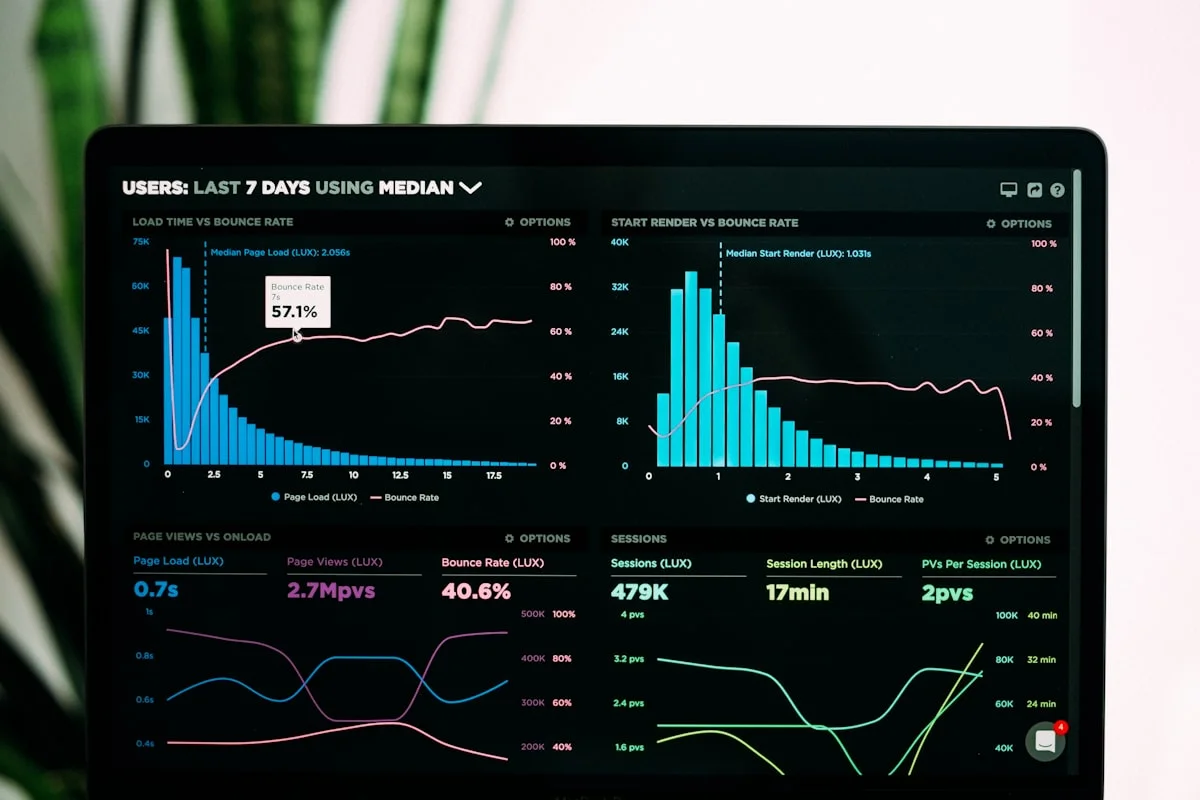
eMonitor's activity tracking captures this data precisely: the URL visited, the time of first access, and the duration spent on that domain. Platforms like Facebook, LinkedIn, X (formerly Twitter), Instagram, TikTok, and Reddit each appear as distinct entries in the activity log. The monitoring software does not access the content of the platforms — it records the access itself, visible through the browser in the same way a network firewall log records outbound connections.
What this monitoring reveals is time allocation, not content. A manager can see that an employee spent two hours on social media platforms on Tuesday afternoon. The manager cannot see what the employee was reading, who they were messaging, or what they posted. This distinction matters legally and practically.
2. Public Social Media Posts That Reference the Company or Violate Policy
Public social media posts — anything posted without privacy restrictions on a personal account — are visible to anyone who searches for them, including employers. An employer reviewing public posts for policy violations (disclosing confidential client information, making defamatory statements, sharing trade secrets) is exercising the same access any member of the public has. This type of review is generally permissible because it requires no special access, no interception of communications, and no credential access.
The critical constraint here is not the monitoring itself but what employers do with the information. Disciplining an employee for public social media posts that constitute protected concerted activity under the National Labor Relations Act (NLRA) creates unfair labor practice liability regardless of whether the monitoring was technically permissible. Terminating an employee for posts discussing wages, working conditions, or organizing efforts — even on a personal account, even outside work hours — is an NLRA violation if the post constitutes protected activity.
The practical guidance is: public posts can be reviewed, but before any adverse employment action based on a social media post, legal counsel should evaluate whether the post could qualify as NLRA-protected concerted activity.
3. Activity on Company-Owned Social Media Accounts
Company-owned social media accounts — the official LinkedIn company page, the business Facebook account, the corporate Twitter profile — are employer property. All activity on these accounts, including posts created, messages sent and received, comments moderated, and analytics accessed, is available to the employer without any monitoring software at all. Employees who manage company social accounts as part of their role work within an employer-owned digital property, and comprehensive oversight of that work is standard practice.
The monitoring of activity on company accounts extends to reviewing direct messages received through company channels, reviewing scheduled posts before publication, and analyzing which employees accessed which features of the account management platform. None of this implicates the same legal concerns as monitoring personal accounts.
Compliance Posture — This Week
Audit events / day
Control status
▲ Policy acknowledgment at 96% across every department.
Illustrative eMonitor dashboard.
What Employee Social Media Monitoring Is Off Limits
Four categories of social media monitoring are either clearly prohibited or carry sufficient legal risk that they should not be attempted without express legal sign-off.
1. Personal Social Media on Personal Devices
Personal devices — phones, laptops, and tablets owned by the employee — are generally outside the scope of employer monitoring authority. Even when an employee uses a personal device to access work email or work applications, the employer's monitoring jurisdiction extends only to the work-related application or MDM-managed partition, not to personal applications on the same device.
BYOD (bring your own device) policies that attempt to extend monitoring to personal social media accounts on employee-owned devices are legally precarious in most jurisdictions. Courts in the US, UK, and EU have consistently drawn a line between monitoring work activity on personal devices (permissible with proper disclosure and limited scope) and accessing personal application data on those devices (generally not permissible).
The practical implication: if an employee uses their personal iPhone to check Instagram during lunch, no employer monitoring program should capture that activity. If the same employee uses a company-issued MacBook to check Instagram during work hours, that visit is visible in the monitoring software.
2. Private Messages on Social Platforms, Even on Company Devices
Private messages on major social platforms — Facebook Messenger, LinkedIn InMail, Twitter DMs, Instagram DMs — are encrypted end-to-end. Monitoring software that records URL access and time spent cannot read the content of these messages because the content is encrypted in transit and at rest within the platform's infrastructure.
This is not merely a technical limitation: attempting to intercept or access the content of private social media messages through technical means would constitute a violation of the ECPA's wiretap provisions, 18 U.S.C. § 2511, which prohibits the intentional interception of wire, oral, or electronic communications. The civil liability exposure is significant: ECPA civil damages include actual damages plus statutory damages of $100 per day of violation or $10,000 (whichever is greater), plus punitive damages and attorney fees.
Monitoring software that captures screenshots at regular intervals would capture messages displayed on screen if the employee has a messaging window open at the moment a screenshot is taken. This is a legally sensitive scenario that monitoring policies should address explicitly: if screenshot intervals are frequent and employees regularly use social messaging platforms on company devices, the policy should address what happens when private message content appears in a screenshot.
3. Personal Accounts Monitored Outside Work Hours
Even on company-owned devices, monitoring employee personal social media activity outside of scheduled work hours raises significant privacy concerns and in some jurisdictions is expressly prohibited. EU member states with right-to-disconnect legislation — France, Italy, Spain, Belgium, and Portugal among them — restrict employer monitoring outside working hours even on company equipment. Several Canadian provinces and some US states are moving toward similar frameworks.
The safest technical approach is time-bound monitoring: configure monitoring software to operate only during defined work hours and not to record activity before shift start or after shift end. eMonitor's work-hours-only monitoring design makes this the default, rather than requiring organizations to manually configure time restrictions.
4. Requiring Social Media Credential Disclosure
Demanding that employees or job applicants provide usernames and passwords for personal social media accounts is prohibited by law in more than 25 US states as of 2026. California Labor Code Section 980, New York Labor Law Section 201-d, Illinois's Right to Privacy in the Workplace Act, and comparable statutes in Texas, Michigan, Washington, and others make this demand explicitly unlawful. Violations carry civil penalties and create tort liability.
Beyond the statutory prohibitions, this practice is also inadvisable because accessing an employee's account through their credentials may violate the Computer Fraud and Abuse Act (CFAA), 18 U.S.C. § 1030, which prohibits accessing a computer without authorization or in excess of authorized access. An employee's personal social media account is not a computer resource the employer is authorized to access.
NLRA Section 7 and Social Media Monitoring: The Protection Employers Most Commonly Violate
NLRA Section 7 protects employees' right to engage in "concerted activities for the purpose of collective bargaining or other mutual aid or protection." The National Labor Relations Board (NLRB) has consistently applied this protection to social media posts, and it applies to both union and non-union workplaces.
What Qualifies as Protected Concerted Activity on Social Media?
Protected concerted activity under NLRA Section 7 includes social media posts that discuss wages with co-workers (even when company policy prohibits discussing compensation), criticize working conditions in terms that invoke collective interest rather than purely personal grievance, express support for organizing or collective bargaining, share information about workplace safety hazards, and discuss the terms and conditions of employment with the goal of improving them.
A single employee complaining about their supervisor on Twitter is generally not protected concerted activity — it is a personal grievance. An employee posting "anyone else at [company] dealing with mandatory unpaid overtime? We need to push back on this" is almost certainly protected concerted activity because it seeks to involve co-workers in a shared employment concern.
The NLRB issued a series of rulings between 2012 and 2022 defining this line, and the current standard is that a post constitutes protected concerted activity when it: (1) involves more than one employee in the discussion, or (2) is made on behalf of other employees, or (3) is a logical outgrowth of prior group activity about employment conditions. The NLRB has overturned terminations, suspended discipline, and ordered reinstatement with back pay in dozens of cases involving social media posts that met this standard.
How Social Media Monitoring Programs Create NLRA Risk
The risk is not just in the discipline or termination — it is in the monitoring itself. A social media monitoring program specifically designed to identify employees who post about working conditions, wages, or workplace grievances may constitute interference with Section 7 rights even before any adverse action is taken. NLRB's standard asks whether the monitoring would reasonably tend to chill employees in the exercise of their NLRA rights.
A broad social media monitoring policy that instructs managers to flag any employee post mentioning the company fails this standard. A narrowly tailored policy that focuses on specific categories — disclosure of trade secrets, confidential client information, defamatory statements — is far more defensible because it targets legitimate business concerns rather than employment conditions discussion.
Reviewing public posts for content that threatens violence, harasses colleagues, or shares genuinely confidential business information is permissible and does not implicate Section 7. Reviewing public posts to identify employees who are organizing or discussing wages crosses into prohibited territory.
State Laws Governing Employee Social Media Monitoring: A 2026 Snapshot
Federal law (ECPA, NLRA, CFAA) sets a baseline for employee social media monitoring, but state laws frequently provide greater protections for employees. Organizations with multi-state workforces must comply with the strictest applicable law for each employee's work location.
California: The Strictest Framework
California Labor Code Section 980 prohibits employers from requiring employees or applicants to disclose personal social media account credentials, demanding access to personal accounts, and retaliating against employees who refuse to provide such access. California's prohibition is broad: it covers usernames, passwords, and any other means of accessing personal accounts.
California also provides strong off-duty conduct protections under Labor Code Section 96(k), which prohibits adverse employment actions based on an employee's lawful off-duty activities. An employee's personal social media posts about non-work topics, political views, or personal opinions made outside work hours on personal devices have significant protection from adverse employer action in California.
Illinois: Right to Privacy in the Workplace Act
Illinois prohibits employers from requesting or requiring access to personal social media accounts and from taking adverse action for an employee's refusal. The state's Biometric Information Privacy Act (BIPA), while primarily focused on biometric data, creates a broader privacy consciousness that courts have applied to monitoring-adjacent claims. Illinois courts have been receptive to privacy tort claims arising from employer overreach in digital monitoring.
New York: Labor Law Section 201-d
New York Labor Law Section 201-d prohibits employers from discriminating against employees based on their legal recreational or political activities conducted outside work hours and away from the employer's premises. This protection extends to social media activity that constitutes legal personal expression outside of work. New York also prohibits demanding social media credentials from employees or applicants.
Other States With Social Media Protection Laws
Michigan, Washington, Nevada, Colorado, Connecticut, Oregon, and Rhode Island all have enacted social media privacy laws with varying degrees of protection. The common thread across all of them is the prohibition on credential demands. The differences lie in how broadly they define protected off-duty activity and whether they address employer monitoring of public posts.
GDPR: The EU Framework
For employees in EU member states, GDPR governs employee social media monitoring data. Key requirements include: a lawful processing basis under Article 6 (typically legitimate interest or performance of a contract), a Data Protection Impact Assessment (DPIA) under Article 35 when monitoring is systematic and large-scale, an Article 13 privacy notice informing employees of the monitoring before it begins, and data minimization under Article 5(1)(c) (monitoring only what is genuinely necessary for the stated purpose).
GDPR's principle of data minimization is particularly relevant to social media monitoring: if the legitimate purpose is measuring productivity during work hours, monitoring app and URL access time is proportionate; reading social media content is not proportionate to that purpose and exceeds what data minimization permits.
The LinkedIn Monitoring Problem: When Work and Personal Use Are Indistinguishable
LinkedIn creates a specific monitoring challenge that other social media platforms do not: legitimate professional use (networking with clients, researching prospects, industry reading) and personal job searching are technically indistinguishable in activity logs.
What Activity Logs Show for LinkedIn
Employee monitoring software that tracks URL access shows LinkedIn.com as a visited domain, the time of access, and the duration. It does not show which pages were visited within LinkedIn, who the employee was messaging, or what job listings they viewed. A sales manager spending two hours on LinkedIn prospecting new clients and an employee spending two hours searching for a new job look identical in the raw monitoring data.
This creates a policy gap: if an employee is disciplined for "excessive LinkedIn use," the employer cannot demonstrate the use was personal rather than professional without accessing content — which the employer is not entitled to access. Policies that attempt to cap LinkedIn time or flag LinkedIn use as non-productive create exactly the ambiguity and potential NLRA problems discussed above.
The Right Policy Approach for LinkedIn
The defensible approach is role-based categorization. For employees whose role includes client-facing professional networking (sales, business development, recruiting, PR), LinkedIn is classified as a productive application in the monitoring software. For employees in roles with no professional networking component, the categorization can be set to neutral with manager discretion. Discipline for LinkedIn use is appropriate only when combined with other performance evidence, not solely on the basis of access time.
eMonitor's productivity classification engine allows managers to label individual applications as productive, non-productive, or neutral on a per-team or per-role basis. A sales team where LinkedIn is a core work tool gets a different classification than a data entry team where it is not.
Policy-Based Monitoring vs. Surveillance-Based Monitoring: Why the Distinction Matters Legally
The most important legal protection an employer has in the social media monitoring space is a well-drafted, consistently applied written policy. Courts and regulatory agencies evaluating monitoring programs routinely distinguish between policy-based monitoring (monitoring to enforce documented rules) and general-purpose monitoring that collects broadly without a defined compliance purpose.
What a Defensible Social Media Monitoring Policy Includes
A legally defensible policy specifies: which devices are subject to monitoring; what types of activity are recorded (URL visits, time spent, not message content); the business purpose of the monitoring (productivity measurement, security, compliance); who has access to monitoring data; how long data is retained; and how the data can be used in employment decisions. Employees acknowledge the policy in writing before monitoring begins.
This specificity matters because vague policies create legal exposure in two directions: employees can claim they were not informed of the monitoring (defeating the consent defense under ECPA), and regulatory agencies can argue the monitoring exceeds what is necessary for the stated purpose (violating GDPR data minimization or proportionality standards in EU jurisdictions).
How eMonitor Supports Policy-Based Monitoring
eMonitor's monitoring is designed to operate within explicitly disclosed parameters. The platform monitors during defined work hours only, captures URL access and time data rather than content, and provides employees with visibility into their own activity data through individual dashboards. This architecture makes the monitoring transparent to employees by design, reducing the notice burden on employers and supporting the trust-building goal of modern workforce management.
The monitoring data eMonitor generates — time spent on LinkedIn.com, time on Facebook.com, time on Reddit.com — is the kind of productivity data that holds up to regulatory scrutiny because it answers a documented business question (how are work hours being used) without overreaching into content that the employer has no legitimate basis to access.

Employee Monitoring That Stays on the Right Side of the Law
eMonitor tracks work-hours activity on company devices — giving managers the productivity data they need without accessing personal content, off-hours activity, or private messages. Try it free for 7 days.
Frequently Asked Questions: Employee Social Media Monitoring and the Law
Can an employer monitor employee social media on company devices?
Employers can legally monitor social media websites visited on company-owned devices during work hours. When an employee accesses Facebook, LinkedIn, or X through a company computer, the browser activity is visible to monitoring software and is generally permissible under ECPA when employees are informed of the monitoring policy. Personal social media accounts on personal devices are outside employer monitoring authority entirely.
Can an employer require an employee to share their social media password?
In California, requiring employees or job applicants to disclose social media account credentials is prohibited by California Labor Code Section 980. Similar laws exist in more than 25 other states. Even in states without explicit legislation, demanding social media passwords exposes employers to privacy tort claims and potential NLRA violations if the stated purpose is to identify employees discussing working conditions.
What is NLRA Section 7 and how does it protect employee social media posts?
NLRA Section 7 protects employees' right to engage in concerted activity for mutual aid and protection, including discussing wages, working conditions, and workplace grievances on social media. Employers cannot discipline employees for social media posts constituting protected concerted activity, and monitoring programs targeting social media to identify employees discussing working conditions may create unfair labor practice liability under the NLRA.
Can employers monitor employee LinkedIn activity?
Employers can see that an employee visited LinkedIn using a company device and how much time was spent on the platform. Monitoring software records the URL and time spent, not the content of messages or connections. Employees using LinkedIn for legitimate work networking and employees searching for new jobs appear identical in activity logs. Role-based productivity classification matters more than attempting to infer intent from access data.
Can employers monitor employees' personal social media accounts?
Employers cannot access the content of personal social media accounts without the employee's consent. Public posts on personal accounts are visible to anyone including employers through normal access, and reviewing public posts for documented policy violations is generally permissible. However, adverse employment action based on public posts that constitute NLRA-protected concerted activity is an unfair labor practice regardless of whether the monitoring was technically permissible.
Does BYOD change what employers can monitor on social media?
BYOD significantly reduces employer monitoring rights. Personal devices used for work may be subject to monitoring of work-related applications installed via MDM, but personal apps including personal social media accounts are not accessible to employer monitoring on BYOD devices. MDM profiles on BYOD devices should be narrowly scoped to work applications only to avoid capturing personal data inadvertently.
Can employers monitor private messages sent on social media from company devices?
Private messages on major social platforms are encrypted end-to-end, meaning monitoring software cannot capture message content even when the social media site is accessed on a company device. Employers see the URL visit and time spent, but not message content. Attempting to intercept encrypted private messages through technical means would likely violate ECPA's wiretap provisions and create significant civil liability.
What is the difference between monitoring work social media accounts and personal accounts?
Company-owned social media accounts are employer property, and all activity on those accounts is subject to employer review. Personal social media accounts belong to the employee regardless of whether they were created before or during employment. Employers may monitor company accounts comprehensively but have no right to access personal account content through monitoring software or credential access.
How should employers communicate social media monitoring policies to employees?
Social media monitoring policies should be documented in the employee handbook, reviewed during onboarding, and acknowledged in writing. The policy should specify which devices are monitored, what types of activity are logged, how data is used, the retention period, and who has access. Explicit written notice of monitoring is required in several US states and under GDPR Article 13 for EU employees.
Does GDPR apply to employee social media monitoring?
GDPR applies to employee monitoring data for employees in the European Union, including social media usage data collected through workplace monitoring. Employers must identify a lawful basis under GDPR Article 6, conduct a Data Protection Impact Assessment if monitoring poses high risk, and provide employees with a GDPR Article 13 privacy notice before monitoring begins. Data minimization under Article 5(1)(c) limits collection to what is necessary for the stated business purpose.
What states have laws specifically restricting employee social media monitoring?
As of 2026, more than 25 US states have enacted laws restricting employer demands for employee social media credentials. California (Labor Code §980), New York (Labor Law §201-d), Illinois (Right to Privacy in the Workplace Act), Texas, and Michigan are among the most prominent. These laws prohibit requiring credential disclosure but generally do not restrict monitoring of company device activity or review of genuinely public posts.